
Paint Sheen Guide: Best Finish for Every Room
Most homeowners spend weeks choosing a color and about thirty seconds choosing a sheen. That is backwards. The best paint sheen for interior walls affects how well the surface cleans, how long it lasts, how much wall imperfection you see, and even how the color reads once it is on the wall.
Sheen simply means how much light the dried finish reflects. Lower sheen absorbs light and hides flaws, while higher sheen reflects it, resists moisture and wipes clean more easily. Everything else is a trade-off between those two ends.
Here is what each level does and where it belongs in a real house.
THE SHEEN SCALE, EXPLAINED
Names vary between manufacturers, and one company's "matte" can reflect more light than another's "eggshell." Always compare within a single product line rather than across brands.
Flat and Matte
Almost no light reflection. Flat is the most forgiving finish available and hides roller marks, patched drywall, wavy plaster and old repairs better than anything else.
The trade-off is cleanability. Traditional flat paints burnish when scrubbed, leaving a shiny mark. Newer scrubbable matte products have narrowed that gap considerably and are worth asking about.
Eggshell
A very low, soft luster. Eggshell is the workhorse for living areas because it still hides minor wall imperfections while tolerating occasional wiping.
If you are unsure what to use on general living-space walls, eggshell is the safe default.
Satin
Noticeably more sheen and a tougher film. Satin cleans well and handles moisture, which makes it the common choice for kitchens, kids' rooms and busy hallways.
Be aware that satin highlights surface flaws. On older plaster walls, satin will show every wave and patch that eggshell would have hidden.
Semi-Gloss
Hard, smooth and highly washable. Semi-gloss is the standard for trim, doors, casings and baseboards, and it is frequently used on bathroom walls.
The contrast between semi-gloss trim and lower-sheen walls is what gives a room that crisp, finished look.
High Gloss
Very reflective, very durable, and completely unforgiving of surface preparation. It is used selectively on a front door, a built-in or a feature piece of millwork rather than across whole rooms.
ROOM-BY-ROOM RECOMMENDATIONS
Living Rooms, Dining Rooms and Bedrooms
Use flat or eggshell. These rooms see light contact and lots of visible wall area, so hiding imperfections matters more than scrubbing.
Choose eggshell if you have children or pets and expect occasional cleaning. Choose flat if the walls are older, uneven, or you want the softest, most even color.
Hallways, Stairwells and Entryways
Use eggshell or satin. These surfaces take hands, shoulders, bags and furniture.
Stairwells also get strong raking light from above, which exaggerates sheen, so satin can look glossier here than it does elsewhere. Eggshell is often the better compromise.
Kitchens
Use satin on walls and semi-gloss on trim. Kitchen walls collect cooking grease and need actual washing, not just dusting.
If your kitchen walls are in excellent condition, satin looks great. If they are patched or textured, a scrubbable matte is a reasonable alternative.
Bathrooms
Use satin or semi-gloss, and look for a product formulated for moisture resistance.
Powder rooms with good ventilation can carry satin comfortably. Full baths with a shower do better with semi-gloss on the wall and around window trim, where condensation is constant.
Ceilings
Use flat. Ceilings are the widest, most raking-light-exposed surface in the house, and any sheen there will telegraph every seam, screw and roller lap.
The one exception is a bathroom ceiling, where a moisture-resistant flat or low-sheen ceiling product handles humidity better.
Trim, Doors and Baseboards
Use semi-gloss, or satin if you prefer a softer modern look.
Trim takes direct contact and needs to be wiped, so durability outweighs flaw-hiding here. This is also where a dedicated enamel outperforms wall paint significantly, and where the amount of millwork in a room shows up in the quote.
Laundry Rooms, Mudrooms and Basements
Use satin. These spaces combine moisture, dirt and scuffing, and the walls are rarely showpieces, so cleanability wins.
Closets
Match the adjoining room, or use the same product one step down in sheen. There is no reason to spend on a premium finish inside a closet.
THREE DETAILS WORTH KNOWING BEFORE YOU CHOOSE
1. Sheen changes how a color looks. The same formula appears slightly deeper and richer in flat, and lighter and cooler in satin, because of how each reflects light. Always test in the sheen you plan to use, which matters even more when you are choosing interior paint colors for an older home.
2. Higher sheen makes touch-ups harder. Spot-touching flat paint is often invisible, while spot-touching satin or semi-gloss usually shows and the wall may need painting corner to corner.
3. Older walls change the calculation. Many homes across Luzerne and Lackawanna Counties have original plaster with gentle waves and old repairs. On those walls, dropping one step in sheen does more for the finished look than any color choice.
MAKING THE FINAL CALL
If you want one simple rule: lower sheen for large, visible, low-contact surfaces, and higher sheen for small, high-contact, moisture-exposed surfaces. Ceilings sit at the bottom of the scale, trim near the top, and walls somewhere in between depending on the room.
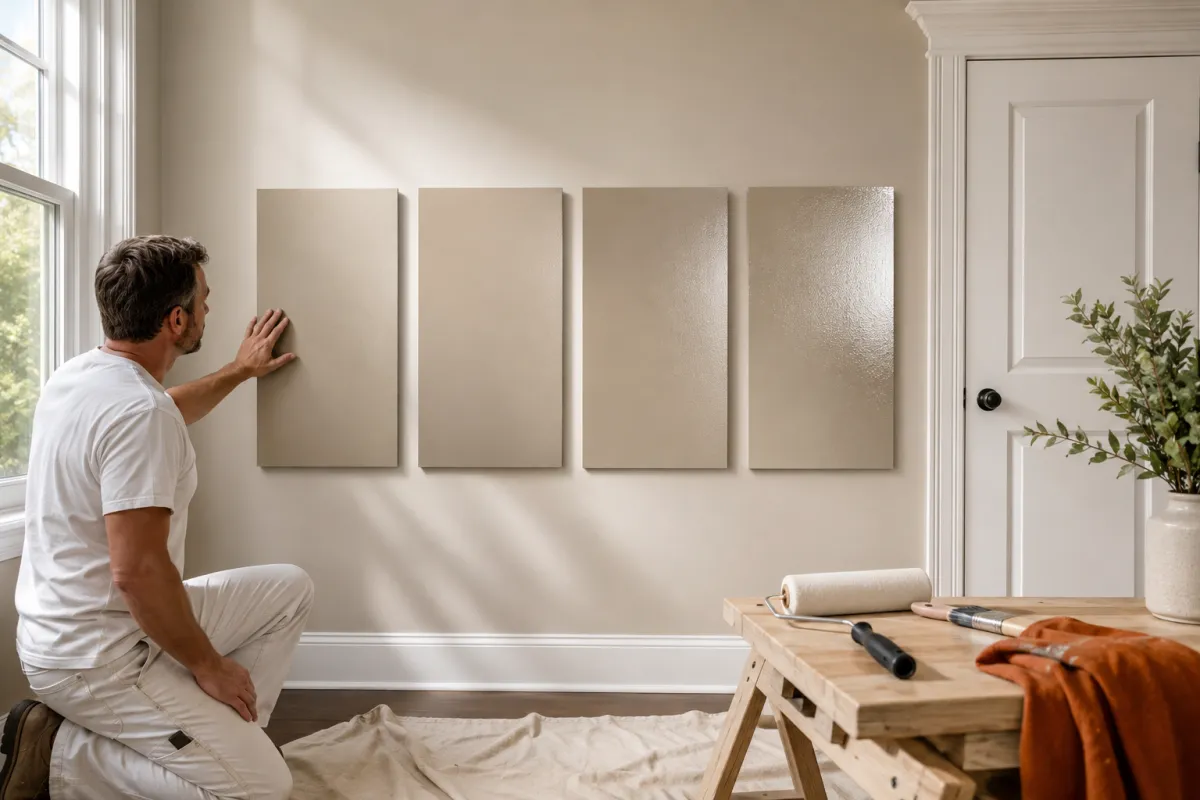
When in doubt, get sample pots in two adjacent sheens, brush them on a section of the actual wall, and look at them in morning and evening light before committing. Our interior painting team specs sheen surface by surface for exactly this reason.
"Color is what people notice first. Sheen is what decides whether the room still looks good after two years of real life."
Advanced Painting Professionals specs products and sheens room by room based on the condition of your walls, not a one-size template. Serving Old Forge, Scranton and surrounding Northeast PA communities. Reach us on (570) 290-8471 or share your project details at https://advancedpaintingprofessionals.com.
FREQUENTLY ASKED QUESTIONS (FAQs)
Q: Can two different sheens be used in the same room?
A: Yes, and it is standard practice. Walls in one sheen with trim and doors in a higher sheen is the most common combination in residential work.
Q: Does a higher sheen mean fewer coats are needed?
A: No. Coverage depends on the pigment, the color change and the product's hiding power rather than the sheen level. Deep colors can need an extra coat in any finish.
Q: Why does my flat paint look shiny in one spot after cleaning?
A: That is burnishing. Rubbing compresses and polishes the surface of a low-sheen film. Blot rather than scrub, and consider a scrubbable matte product next time.
Q: Do sheen names mean the same thing at every paint store?
A: No. Sheen is measured as a gloss range, and each manufacturer sets its own. Compare sample cards within one brand's line rather than assuming names translate.
