Can You Paint Vinyl Siding? What Homeowners Should Know
Yes, vinyl siding can be painted, and for homes with sound panels in a dated color, painting is often far less costly than replacement. But vinyl comes with one rule that has no equivalent in wood or fiber cement siding, and ignoring it can permanently damage the house.
The rule: never paint vinyl siding a color darker than the original. Vinyl expands and contracts with heat, and a dark color absorbs significantly more solar energy than a light one. Push it far enough past what the panel was engineered for and the siding buckles, warps or sags, which is a failure no amount of repainting will fix.
Here is everything else that determines whether painting your vinyl is a good decision.
WHEN PAINTING VINYL SIDING MAKES SENSE
Painting is a strong option when:
- The panels are intact, securely fastened and not brittle
- The color is faded, chalky or simply out of date
- You want a modest color change within a lighter range
- Replacement is not in the budget this year
- The siding is a discontinued profile that would be difficult to match
Painting is the wrong answer when:
- Panels are cracked, split, warped or pulling loose
- The siding has hail damage or impact holes
- There is evidence of moisture or rot behind the siding
- The material has become brittle enough to crack when flexed
Paint is a coating, not a repair. Compromised siding should be replaced rather than covered.
THE COLOR RULE IN DETAIL
Paint manufacturers publish vinyl-safe color collections specifically formulated to reflect more heat than their conventional counterparts. These are the colors to work from.
Two guidelines matter:
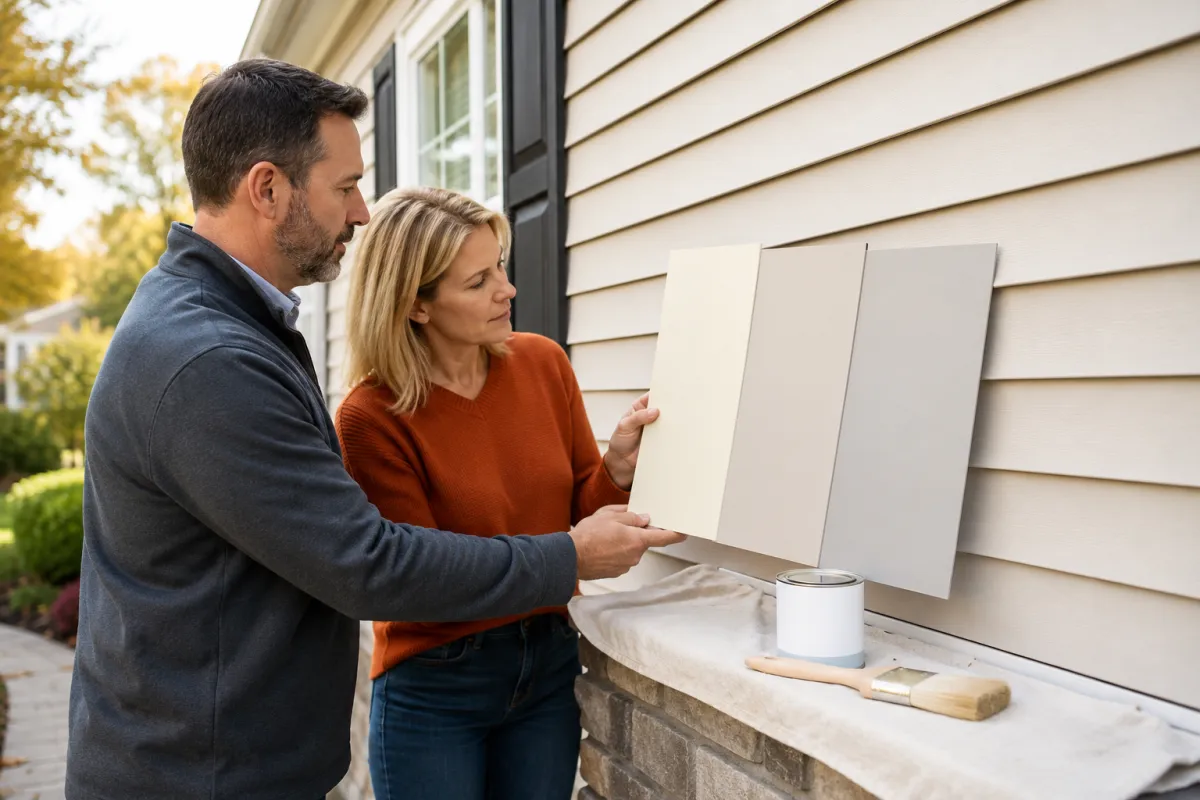
1. Do not go darker than the existing siding. Light Reflectance Value, or LRV, is the standard measure, and a lower LRV means a darker, more heat-absorbing color. Staying at or above the original siding's LRV is the safe approach.
2. Use a vinyl-safe formulation where you want a deeper look. These products use specialty pigments that reflect infrared energy, allowing somewhat darker shades without the same heat gain.
Also check your siding manufacturer's guidance. Painting may affect the terms of an existing siding warranty, so it is worth reading before you commit, especially on relatively new siding.
PREPARATION DECIDES WHETHER IT LASTS
Vinyl is smooth, non-porous and often chalky after years of sun. Nothing sticks well to that surface without proper prep.
Step 1: Wash Thoroughly
The siding must be free of dirt, pollen, mildew and chalk. Chalk in particular acts as a release layer, and paint applied over it will peel.
Use an appropriate cleaning solution and low-pressure washing. High pressure forces water up behind the panels, which is exactly where you do not want it.
Step 2: Treat Mildew, Don't Just Rinse It
Shaded elevations across Northeast Pennsylvania commonly grow mildew. Rinsing hides it, but it needs to be killed with a suitable cleaner or it will grow through the new coating.
Step 3: Let It Dry Completely
Water gets trapped in the overlaps and behind the J-channel. Allow adequate drying time before any coating goes on, and longer after a humid or rainy stretch.
Step 4: Repair and Refasten
Loose panels get refastened. Panels are designed to hang and move freely, so nails are not driven tight, which makes this a detail worth leaving to someone who understands the system.
Step 5: Prime Where Required
Many quality exterior acrylics bond to clean vinyl without primer, while some situations call for a bonding primer, including heavily chalked surfaces, repairs and previously painted vinyl. The product data sheet is the authority here.
Step 6: Apply in the Right Conditions
Vinyl expands in heat. Coating panels in direct summer sun at their most expanded state is asking for a stressed film. Working in shade and moderate temperatures produces a better result, which is one more reason to plan around the right season for exterior work.
WHAT ABOUT ALUMINUM SIDING?
Aluminum is an excellent candidate for painting, and unlike vinyl, it has no heat-related color restriction.
The main task with aluminum is removing the heavy oxidation and chalking that older panels develop. Once it is clean and sound, a quality exterior acrylic bonds well and dramatically improves the appearance of siding that would otherwise look permanently tired.
Many homes in the region have aluminum on part of the exterior, often on gable ends, soffits or an addition, and exterior painting is a practical way to unify it with the rest of the house.
REALISTIC EXPECTATIONS
A well-executed vinyl repaint gives you a fully updated exterior for a fraction of a residing project, and it opens up color options the siding manufacturer never offered.
What it does not do is change the siding's texture or profile, hide damaged panels, or last forever. Like any exterior coating, it will need washing to stay looking sharp and will eventually need attention on the most sun-exposed elevations, much like exterior paint on any other substrate.
THE SHORT ANSWER
You can paint vinyl siding, provided the panels are sound, you stay within vinyl-safe colors that are no darker than the original, and the surface is properly cleaned and de-chalked first. Get those three right and the finish performs well. Get the color wrong and you may be replacing siding instead of repainting it.
"On vinyl, the color you choose is not just a design decision. It is a heat decision the panels have to live with every summer."
Advanced Painting Professionals will look at the condition of your panels and tell you plainly whether painting is the right call or whether repairs should come first. Serving Old Forge, Scranton, and Wayne, Pike, Susquehanna, Lackawanna and Luzerne Counties. Speak with us at (570) 290-8471 or send photos through https://advancedpaintingprofessionals.com.
FREQUENTLY ASKED QUESTIONS (FAQs)
Q: Will paint stop vinyl panels from expanding and contracting?
A: A thin, flexible acrylic film does not lock panels in place. Problems arise when coating builds up in the nail slots and overlap channels, which is why those areas are handled carefully rather than flooded with paint.
Q: How does painted vinyl siding hold up compared with the original factory color?
A: Factory color runs through the material, so it cannot chip. A painted surface is a film and can eventually wear or fail if prep was inadequate. With correct prep it performs like any quality exterior coating on a smooth substrate.
Q: Can vinyl shutters, trim and the garage door be painted at the same time?
A: Usually yes, and doing them together produces a much more cohesive result. Vinyl shutters follow the same color and heat rules as the siding.
Q: Does painted vinyl siding need different maintenance afterward?
A: Only gentle periodic washing, the same as any painted exterior. Avoid abrasive cleaning and high-pressure washing, which can cut through the coating.
