Cabinet Painting vs. Refinishing: What’s the Difference?
Introduction
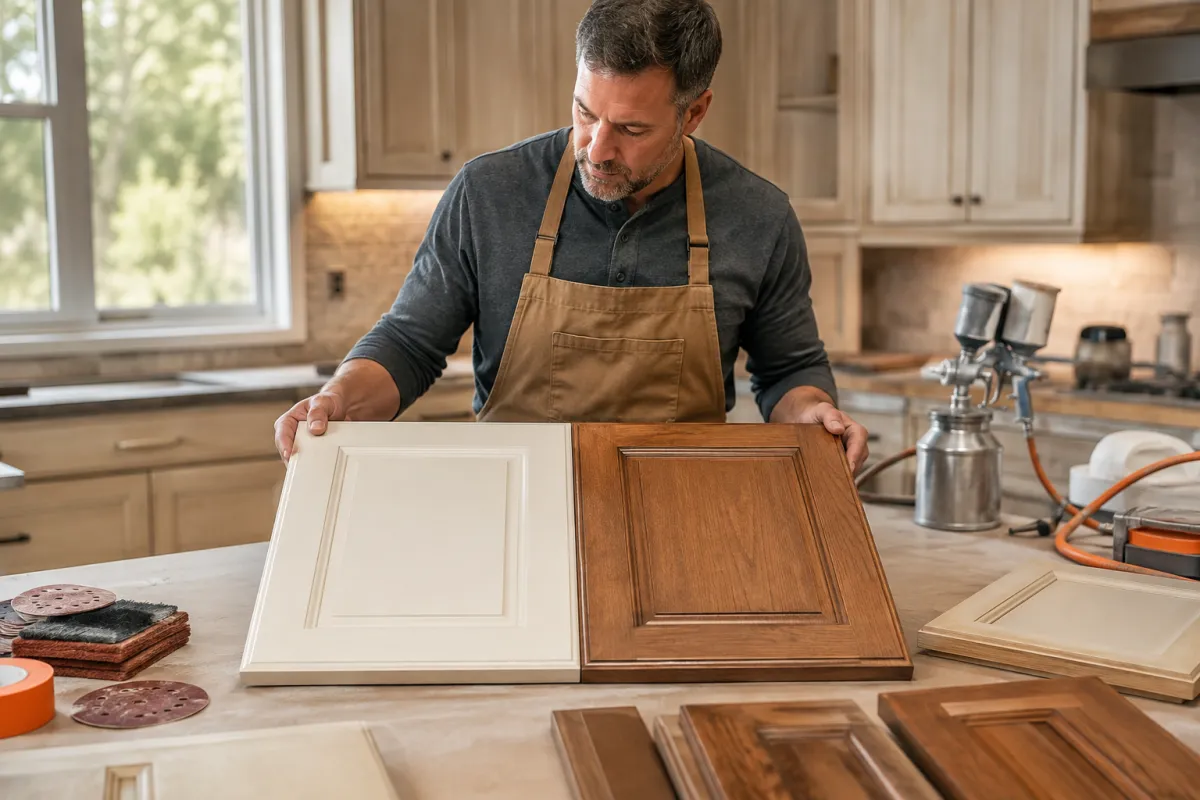
Ask three contractors about updating your kitchen cabinets and you may hear three different words for what sounds like the same job. The short version: painting means applying a new opaque coating over the existing cabinets, while refinishing describes a fuller process of stripping or thoroughly preparing the original finish and rebuilding it, sometimes with paint and sometimes with stain and clear coat.
Both keep your existing boxes and doors. Neither involves new cabinetry. The difference lies in how much of the old finish is removed, what goes on top, and how the final surface behaves over time.
Here is how to tell which one your kitchen needs.
Quick summary
- Painting applies an opaque color finish over properly prepared cabinets
- Refinishing can remove or rebuild the existing finish and preserve visible wood
- Both retain the existing cabinet boxes and doors
- Proper degreasing and sanding are critical to adhesion
- Cabinet painting normally uses a bonding primer and cabinet-grade enamel
- Refinishing is better suited when the natural wood appearance should remain visible
- Material type affects which method is suitable
- Prep quality and topcoat quality are major durability factors
What Cabinet Painting Involves
Cabinet painting changes the color to an opaque finish. Done properly, it is a lot more than brushing on wall paint.
A professional sequence generally looks like this:
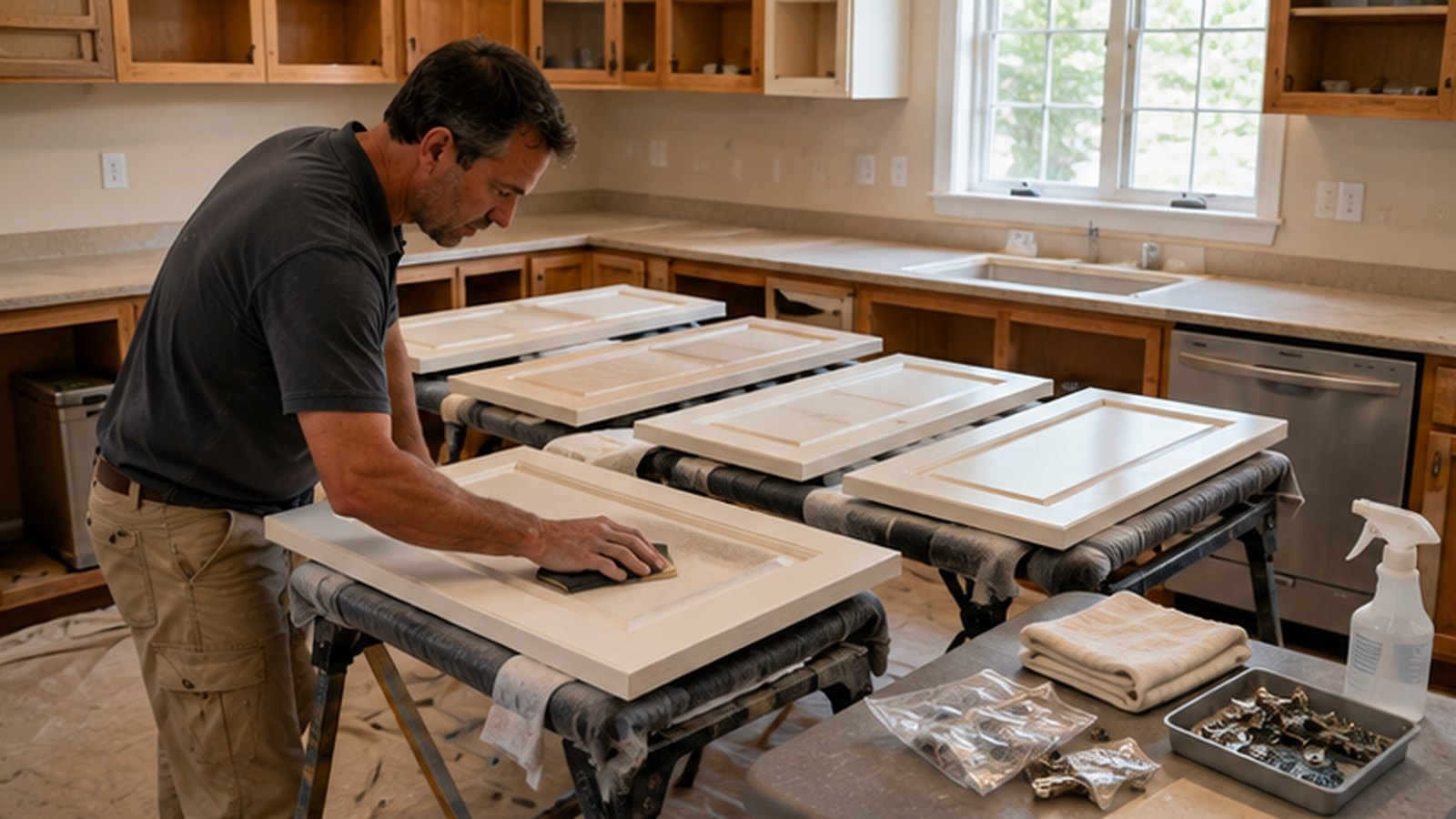
- Doors and drawer fronts are removed, labeled and taken to a controlled work area.
- Hardware comes off and hinges are bagged by location.
- Every surface is degreased, since kitchens carry cooking oils that block adhesion.
- Surfaces are scuff-sanded to break the sheen of the existing finish.
- A bonding primer suited to the substrate is applied.
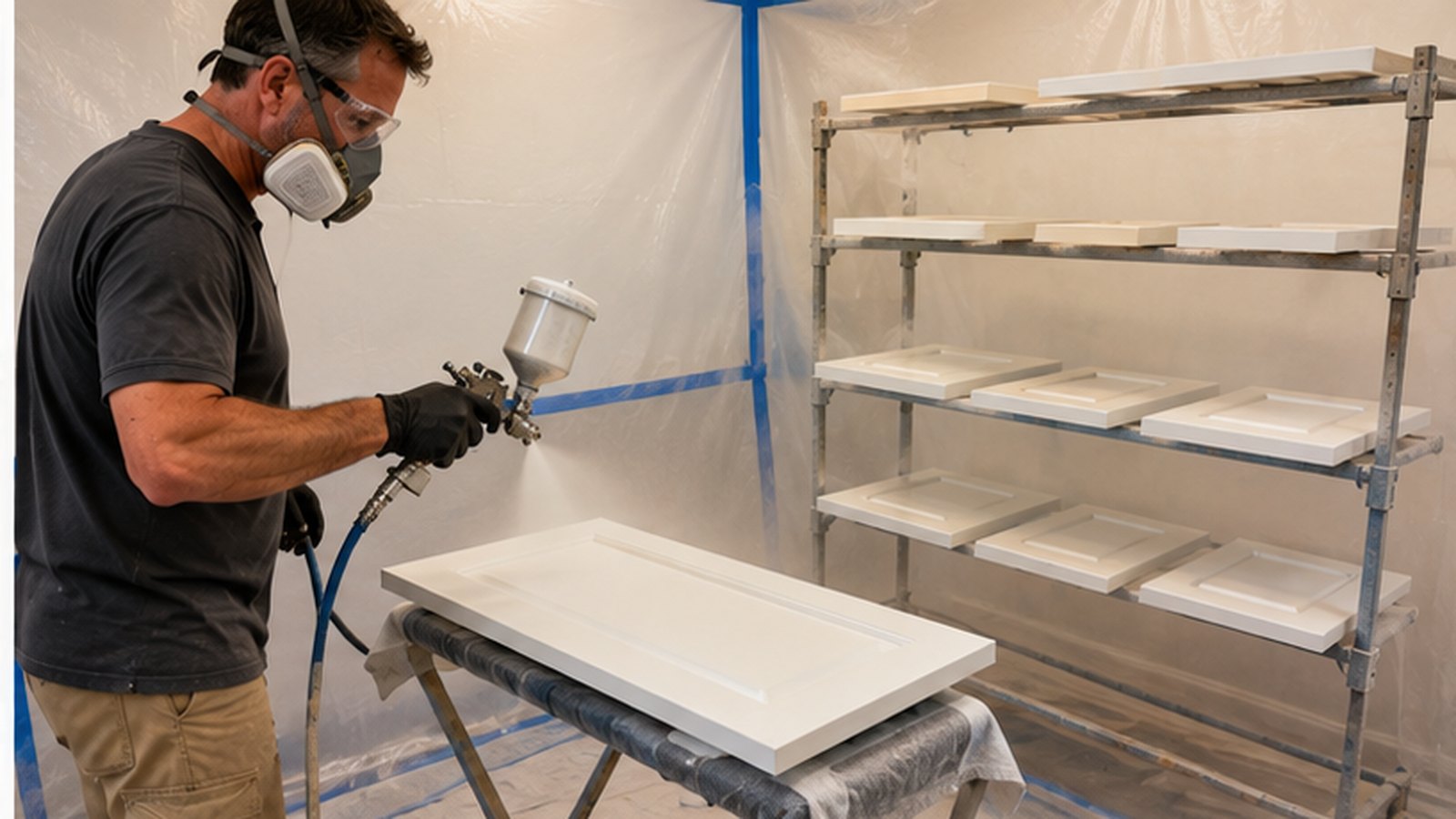
- Two or more coats of a cabinet-grade enamel are sprayed, with sanding between coats.
- Doors cure flat before rehanging and adjustment.
The visible grain of oak or ash usually still shows through paint unless the grain is filled first, which is an extra step some homeowners want and others actually prefer to keep.
What Cabinet Refinishing Involves
Refinishing is the broader term. It covers restoring or replacing the existing finish system rather than simply coating over it.
Depending on the cabinets, cabinet refinishing may include:
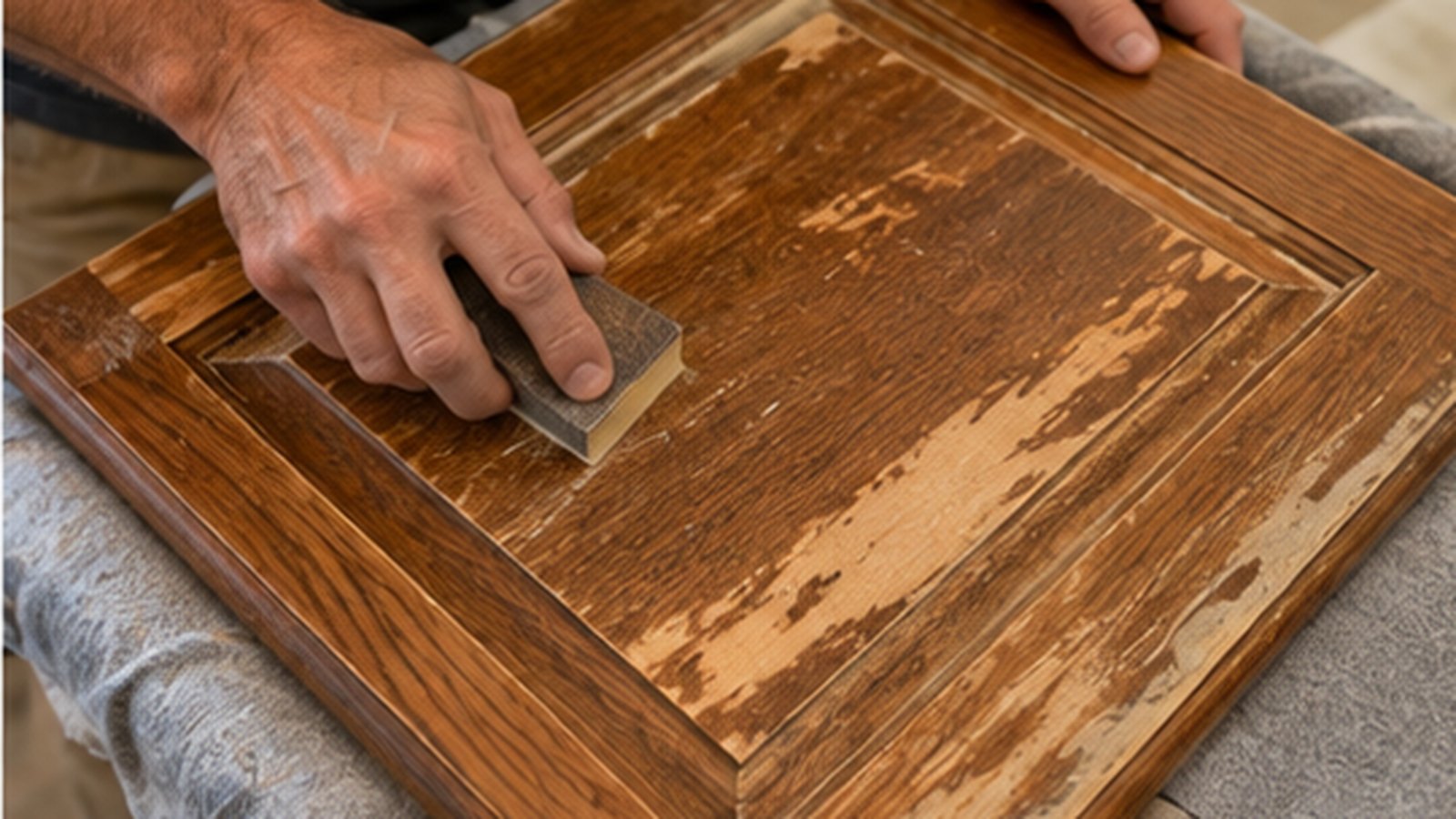
- Stripping or heavy sanding of the original finish rather than only scuffing it
- Repairing damaged veneer, loose joints, worn edges and door alignment
- Re-staining to a different wood tone, then sealing with a clear topcoat
- Toning or glazing to even out color variation
- Applying a new clear coat over wood you want to keep visible
Refinishing is the route when you want to keep a wood look, change the wood tone, or when the existing finish is failing badly enough that coating over it would not hold.
Side-by-Side Comparison
Appearance
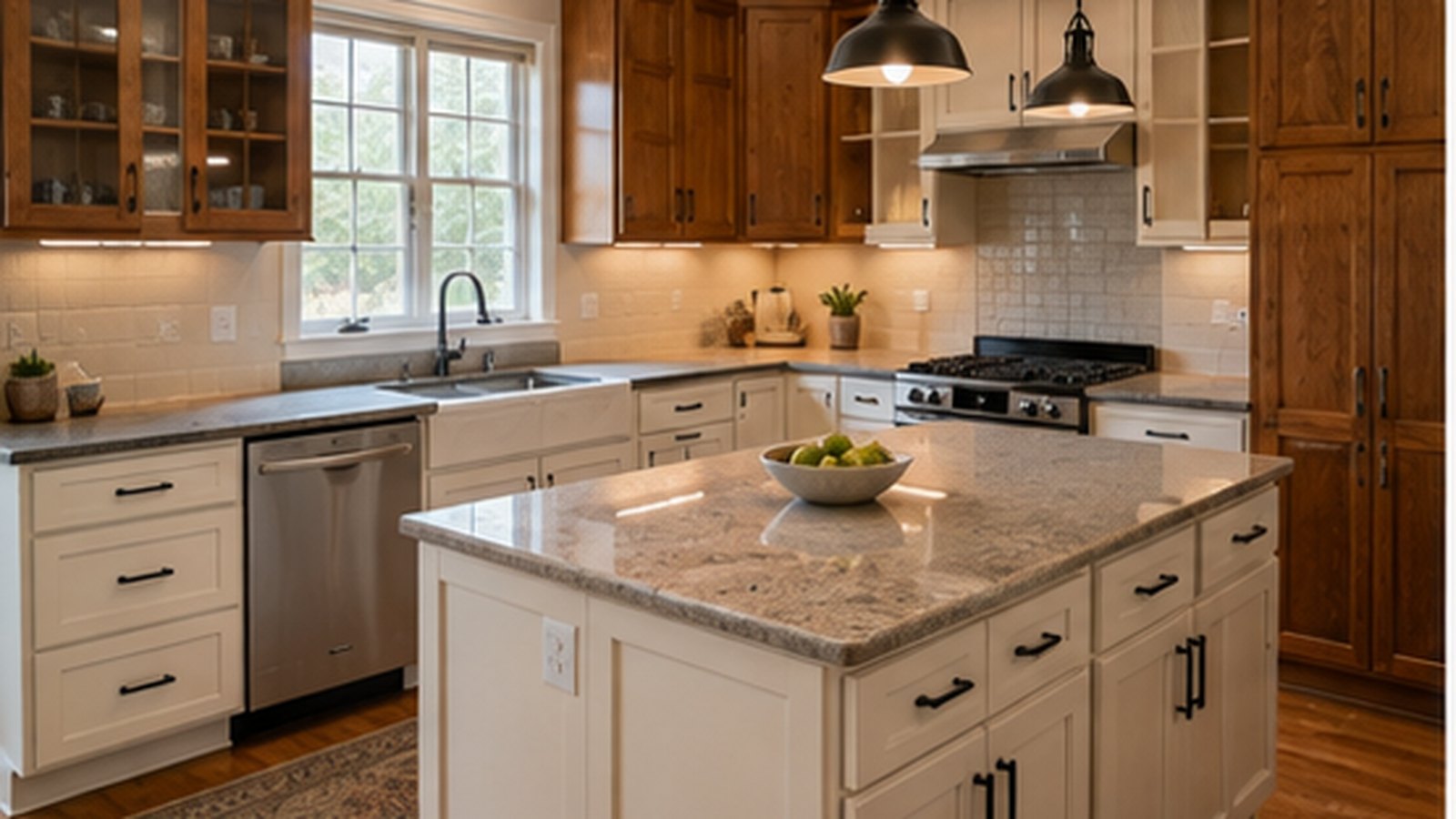
- Painting delivers a solid color and a uniform, furniture-like look. It is the standard path to white, greige, navy or two-tone kitchens.
- Refinishing to stain preserves the wood character and grain. It is a natural choice when you like your cabinetry but the finish looks tired.
Which Cabinets Suit Each Method
- Solid wood and wood veneer work for either approach.
- Oak takes paint well, though the open grain telegraphs through unless filled.
- Thermofoil and laminate cannot be stained. They can sometimes be painted, but only with the right bonding primer and only if the surface is intact. Peeling thermofoil should be addressed first.
- Melamine or particleboard boxes with wood doors are common. In that case the doors may be refinished while the boxes are painted to match.
Process Time and Disruption
Both approaches require removing doors and multiple cure cycles, so kitchens are typically usable but unfinished for a stretch. Refinishing with stripping generally takes longer, since removal of the old coating is added to the front of the process.
Durability
Durability comes less from the label and more from three things: how thoroughly the surface was degreased and sanded, whether a correct bonding primer was used, and the quality of the topcoat. A sprayed cabinet-grade enamel over proper prep holds up well in a busy kitchen, while the same product over greasy, unsanded doors will chip at the edges within months. After the work is done, keeping refinished cabinets looking new comes down to gentle cleaning rather than aggressive scrubbing.
Which Should You Choose?
Choose cabinet painting if:
- You want a color change, especially to a light or neutral palette
- Your cabinet boxes and doors are structurally sound
- The current finish is intact and simply dated
- You are comfortable with grain showing through, or want it filled
Choose cabinet refinishing if:
- You want to keep a natural wood appearance
- You want to shift the stain tone rather than cover it
- The existing clear coat is peeling, cloudy or worn through in spots
- The cabinets have damage that needs correcting before any coating goes on
Many real kitchens end up somewhere in the middle, with repair and heavy prep on the doors, a color change on the boxes, new hardware, and adjustments so everything closes evenly again.
What to Ask Before You Commit
- Will the doors be removed and finished off site or in place?
- How will overspray and dust be controlled in the rest of the house?
- Which primer and topcoat are being used, and are they cabinet-rated?
- Will grain filling be included on oak?
- How long before doors are rehung, and how long before the finish is fully cured?
- Will hinges and hardware be reused or replaced?
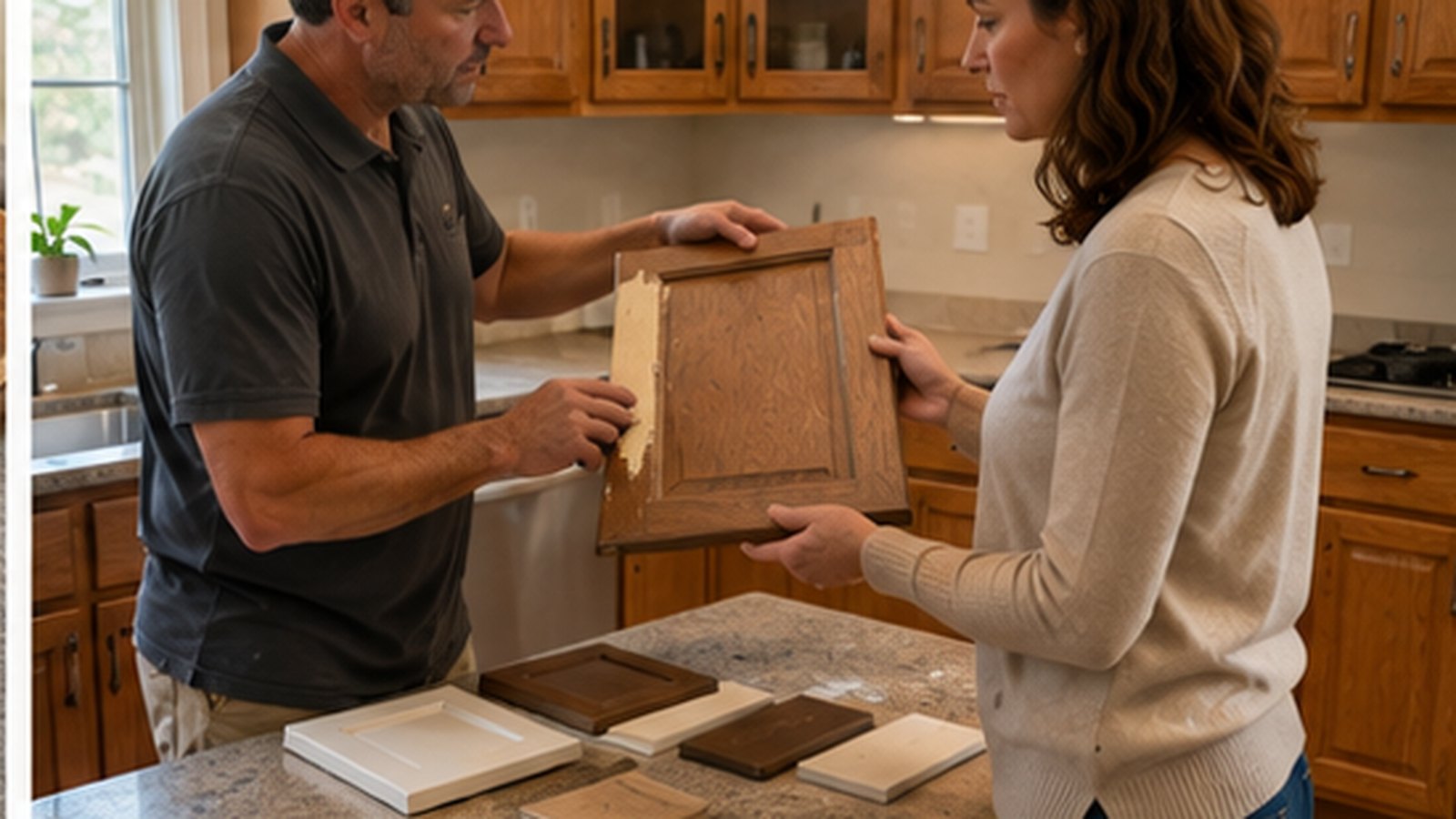
Clear answers here separate a lasting result from a short-lived one, and it is always worth taking the time to talk through your kitchen before work is scheduled.
The Bottom Line
Cabinet painting vs refinishing is really a question of what you want the finished kitchen to look like and what condition your existing finish is in. Painting is the path to an opaque color change, while refinishing is the path to restored or re-toned wood and is also the answer when the old finish is too far gone to coat over.
Either way, the prep work of degreasing, sanding and correct priming determines whether the result still looks good in a few years.
"The finish you see is only as good as the surface underneath it. On cabinets, prep is not a step you can shorten."
Advanced Painting Professionals
Advanced Painting Professionals handles cabinet refinishing for homeowners across Old Forge, Scranton and the surrounding Northeast PA counties, and we will tell you honestly which approach fits your cabinets. Call (570) 290-8471 or send your kitchen details through advancedpaintingprofessionals.com to get started.
Need help with your painting project?
Cabinet painting and refinishing both keep your existing boxes and doors.
Frequently Asked Questions
Can cabinet doors be finished without removing them from the kitchen?
Some in-place work is possible, but removing doors and drawer fronts gives a cleaner, more even sprayed finish and allows them to cure lying flat, which reduces sagging and runs.
Will new hardware fit if the old holes don't line up?
Often yes, if the new pulls share a similar hole spacing. If not, existing holes can be filled and redrilled during the process, which is easiest to decide before finishing begins.
Is the smell strong during a cabinet project?
It depends on the coating system. Waterborne cabinet enamels have far less odor than older solvent-based products, and containment plus ventilation keeps the rest of the house comfortable.
Do the cabinet interiors get finished too?
Usually only if requested. Many homeowners finish the exterior faces, door interiors and face frames, leaving shelf interiors as they are to control cost and downtime.
Advanced Painting Professionals
Send your kitchen details to get started
We will tell you honestly which approach fits your cabinets.
Cabinet refinishing for homeowners across Old Forge, Scranton and the surrounding Northeast PA counties.
